02.11.2025
Fighting corruption decisively, in depth, and with strong widespread impact
QĐND Online – During the XIIth Party Congress term, the fight against corruption (CAC) was led, directed, and implemented decisively, systematically, and in depth, achieving significant progress, producing important results, creating a positive effect, becoming a trend, and spreading strongly throughout society. The Electronic People’s Army Newspaper interviewed Comrade Trần Ngọc Liêm, Deputy Chief of the Government Inspectorate, on this issue.
The “Commander-in-Chief” role of the Steering Committee
Reporter (R): The draft political report submitted to the XIIIth Party Congress evaluates: “The fight against corruption was led, directed, and implemented decisively, comprehensively, in depth, with very high political determination, no forbidden zones, no exceptions, achieving many important results, supported by cadres, Party members, and the people. Corruption has been gradually restrained and prevented.” Could you share what breakthroughs the Government Inspectorate has achieved in this work during the past term?
Comrade Trần Ngọc Liêm: First, it is necessary to mention leadership and direction with breakthrough adjustments that created positive results, especially the role of the Central Steering Committee (CSC) on CAC, chaired by General Secretary and State President Nguyễn Phú Trọng. The CSC truly acted as the “commander-in-chief” and “conductor” of the anti-corruption work with innovations in both content and methods. The CSC focused on weak and difficult areas, worked seriously, responsibly, systematically, coordinated closely, with high determination, and increasingly effective results.
The next important breakthrough is that detecting and handling corruption has been directed and implemented in a synchronized, decisive, and effective manner. Coordination among agencies and functional units in CAC has been strengthened, especially between Party inspection and internal affairs agencies with inspection, audit, and investigation bodies; between inspection and audit with investigation agencies; between central and local judicial agencies and ministries, sectors.
Since the beginning of the XIIth Congress term, Party committees have disciplined over 3,200 Party members involved in corruption, including many officials under central management—a breakthrough in Party inspection and discipline work.
Since 2013, inspection and audit have proposed handling over VND 700,000 billion, recovered more than 20,000 hectares of land; recommended responsibility handling for over 14,000 collectives and many individuals; referred nearly 700 cases with signs of crimes to investigative agencies.
Action paired with words, no forbidden zones
These results demonstrate the strict implementation of the principle: action paired with words, no forbidden zones, no gaps, no exceptions.
Alongside strict handling of violations, asset recovery has improved: the recovery rate in criminal corruption and economic cases increased from below 10% in 2013 to 32.04% on average during 2013–2020. This breakthrough helps eliminate economic motives for corruption and remediate its consequences.
Another important breakthrough is personnel work, ensuring democracy, fairness, objectivity, transparency, and proper leadership by the Party. Many synchronized and feasible regulations were issued, addressing existing issues in personnel management. Cases of “position trading” and localism, “group interests” have significantly decreased. Effective personnel management reduces corruption and negative behaviors in leadership and management.
Institutional strength and the “5 no’s” transformation
R: During the past term, building and improving institutions has been promoted to establish strict prevention mechanisms to ensure cadres and Party members “cannot,” “dare not,” and “do not need to” engage in corruption. Could you explain the role of institutional and legal improvement in CAC and the outstanding results achieved?
Comrade Trần Ngọc Liêm: To combat corruption effectively, international experience and Vietnam’s practice show that strict prevention mechanisms must be established to “make corruption impossible,” detection and handling mechanisms to “make corruption daring impossible,” and proper incentives to “make corruption unnecessary.” Establishing these mechanisms requires building and perfecting institutions. Party policies on CAC must be institutionalized into law. Legal regulations need review, assessment, amendment, and supplementation to address shortcomings, close loopholes prone to corruption.
From 2013 onwards, the Central Committee, Politburo, Secretariat, and advisory agencies issued over 200 documents on Party building, rectification, and CAC; the National Assembly issued over 250 laws, ordinances, and resolutions; the Government and Prime Minister issued over 2,600 decrees, decisions, and directives; central Party organizations issued over 45,000 documents; ministries, sectors, and localities issued nearly 88,000 documents to guide CAC implementation. Notably, the 2018 Anti-Corruption Law was built upon 10 years of experience since 2005, introducing new measures, addressing shortcomings, and creating an important legal basis for future CAC efforts.
Overall, these institutional and policy results established strong, decisive new solutions for Party rectification, economic and social institutional improvement, and CAC. Many resolutions were strictly implemented, addressing gaps and weaknesses leading to corruption. International best practices, such as the UN Convention against Corruption, have been largely incorporated into Vietnam’s legal framework, ensuring the Party’s guidelines and laws are basically complete for effective CAC implementation. Remaining challenges mainly lie in implementation.
(To be continued)
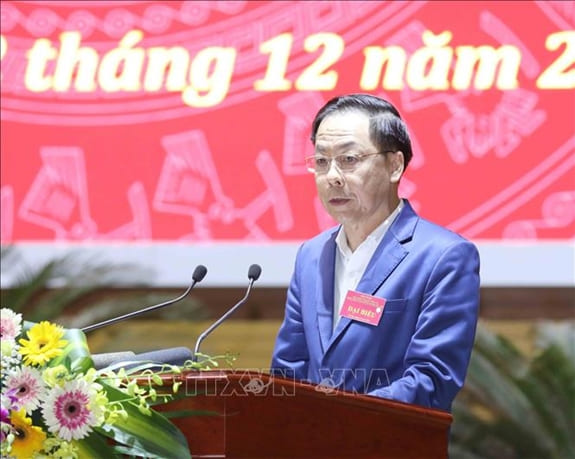
Comrade Trần Ngọc Liêm, Deputy Chief of the Government Inspectorate. Photo: TTXVN
Bài viết liên quan